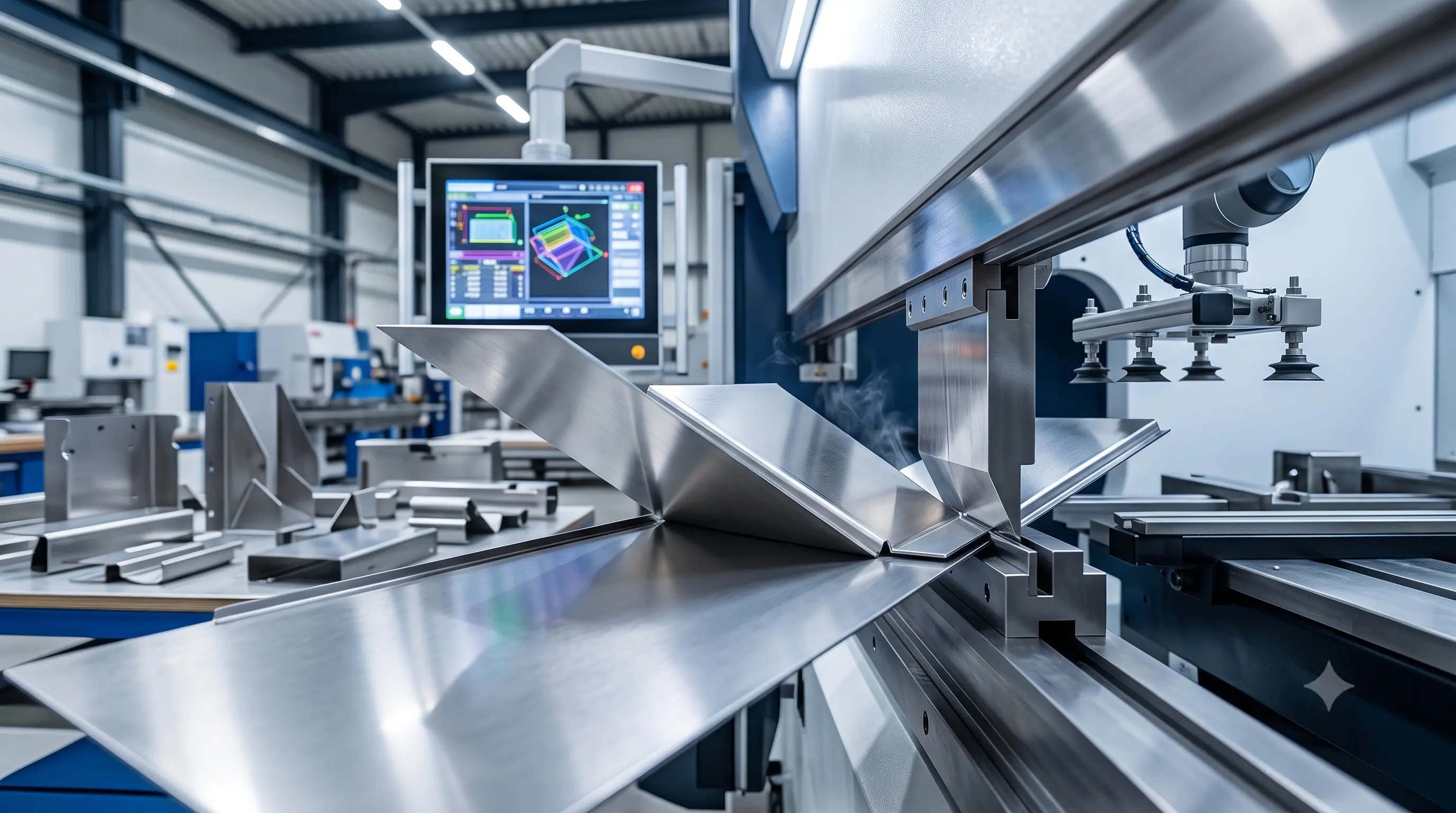
CNC Bending in Sheet Metal Fabrication: Benefits & Applications
CNC bending is an essential process in modern sheet metal fabrication, used to transform flat metal sheets into accurate and functional components. From brackets and panels to machine enclosures and industrial assemblies, CNC bending is widely used across manufacturing industries.
For OEMs and manufacturers looking for CNC bending services in Pune, understanding how the process works, its benefits, accuracy, and applications can help in selecting the right manufacturing partner.
What Is CNC Bending?
CNC bending is a computer-controlled sheet metal forming process. A CNC press brake uses a punch and die to apply controlled force to a metal sheet and form it into the required angle or shape.
The process can be used with materials such as:
- Mild steel
- Stainless steel
- Aluminium
- Galvanized steel
The material thickness, bend radius, tooling, and required tolerance determine the appropriate bending method.
How Does CNC Bending Work?
The CNC bending process generally involves these stages:
- Drawing Review – Engineering drawings or CAD files are reviewed for dimensions, angles, material, and tolerances.
- Programming – Bending sequences and machine parameters are programmed.
- Tool Selection – Suitable punches and dies are selected.
- Sheet Positioning – The sheet is accurately positioned using the CNC back-gauge system.
- Bending – Controlled force forms the sheet to the required angle.
- Inspection – The finished component is checked against the specified dimensions.
This controlled approach makes CNC bending suitable for both repeat production and high-volume manufacturing.
Benefits of CNC Bending
1. High Accuracy
CNC-controlled positioning helps produce consistent bend angles and dimensions. This is particularly important when fabricated components must fit accurately into larger assemblies.
2. Excellent Repeatability
For OEM production, hundreds or thousands of components may need to meet the same specifications. CNC programming helps maintain consistent results across production batches.
3. Better Production Efficiency
Once the machine is programmed and set up, components can be processed efficiently with reduced manual measurement and handling.
4. Complex Component Designs
CNC bending can produce components with multiple bends, angles, and profiles, making it suitable for brackets, panels, cabinets, enclosures, frames, and machine components.
5. Reduced Manual Errors
Computer-controlled positioning reduces errors associated with manual measurements and helps improve production consistency.
What Affects CNC Bending Accuracy?
CNC bending accuracy depends on several factors, including:
- Material type
- Sheet thickness
- Machine capability
- Tooling
- Bend radius
- Component dimensions
- Machine setup
- Material springback
- Inspection methods
Springback occurs when metal slightly returns toward its original shape after bending force is removed. Experienced manufacturers account for this during machine programming and process setup.
Therefore, the required accuracy should always be evaluated according to the specific material, component design, and tolerance requirements.
CNC Bending Applications
CNC bending is used across a wide range of industries.
Automotive
Brackets, supports, panels, frames, and other fabricated components.
Electronics & Telecommunications
Equipment enclosures, cabinets, panels, and mounting components.
Robotics
Robot enclosures, guards, brackets, frames, and custom fabricated parts.
Medical Equipment
Equipment housings, panels, frames, and precision components.
Food & Beverage
Stainless-steel panels, equipment frames, cabinets, and fabricated components.
Industrial Machinery
Machine covers, brackets, enclosures, frames, and structural components.
CNC Bending vs Manual Bending
CNC bending offers greater control and repeatability than conventional manual bending.
| Feature | CNC Bending | Manual Bending |
| Accuracy | High | Operator dependent |
| Repeatability | High | Variable |
| Complex designs | Suitable | More limited |
| Production volume | Medium to high | Generally lower |
| Programming | CNC controlled | Manual |
| Production consistency | High | Depends on operator |
Manual bending can still be useful for specific low-volume or specialised applications. However, CNC bending is generally preferred when accuracy and repeatability are important.
CNC Bending and Laser Cutting
CNC bending is often combined with laser cutting as part of the complete sheet metal fabrication process.
A typical workflow is:
Raw Material → Laser Cutting → CNC Bending → Fabrication → Surface Finishing → Inspection
Laser cutting creates the required flat profile, while CNC bending forms it into the final three-dimensional shape.
Using both processes through one sheet metal fabrication company in Pune can simplify production coordination and improve manufacturing efficiency.
CNC Bending Services in Pune
Pune is a major industrial and manufacturing centre, with strong demand from automotive, engineering, electronics, robotics, and industrial equipment companies.
When choosing a CNC bending company in Pune, consider:
- Machine capabilities
- Material and thickness range
- Dimensional accuracy
- Production capacity
- Quality control
- Engineering support
- Lead times
- Related fabrication services
Choosing a supplier that combines CNC bending, laser cutting, fabrication, and finishing can provide a more integrated manufacturing solution.
Why Choose Phoenix Fabricators?
Phoenix Fabricators India Pvt Ltd provides CNC bending and sheet metal fabrication services in Pune for OEMs and industrial manufacturers.
Our capabilities include CNC bending, laser cutting, custom fabrication, powder coating, shot blasting, and laser engraving.
Based in Pune, Maharashtra, we provide Pan-India delivery and also serve customers in Europe and Australia.
Phoenix Fabricators supports manufacturing requirements across automotive, electronics and telecommunications, robotics, medical equipment, food and beverage, and industrial sectors.
Frequently Asked Questions
1. What is CNC bending in sheet metal fabrication?
CNC bending is a computer-controlled process that uses a press brake to form sheet metal into specific angles and shapes with consistent positioning and repeatability.
2. What are the main benefits of CNC bending?
The main benefits include high accuracy, repeatability, production efficiency, reduced manual errors, and the ability to produce complex bent components.
3. What materials can be used for CNC bending?
CNC bending can be used with materials such as mild steel, stainless steel, aluminium, and galvanized steel, depending on machine and tooling capabilities.
4. Where can I find CNC bending services in Pune?
When looking for CNC bending services in Pune, compare machine capabilities, material range, accuracy, production capacity, quality systems, and related sheet metal fabrication services.
5. Can CNC bending be combined with laser cutting?
Yes. Laser cutting and CNC bending are commonly combined. Laser cutting produces the required flat profile, while CNC bending forms it into the required shape.
Conclusion
CNC bending is a key part of modern sheet metal fabrication, providing accuracy, repeatability, flexibility, and efficient production.
For OEMs and industrial manufacturers, selecting an experienced CNC bending company in Pune can help ensure consistent component quality and reliable production.
Phoenix Fabricators combines CNC bending, laser cutting, custom fabrication, powder coating, shot blasting, and laser engraving, with Pan-India delivery and international supply to Europe and Australia.