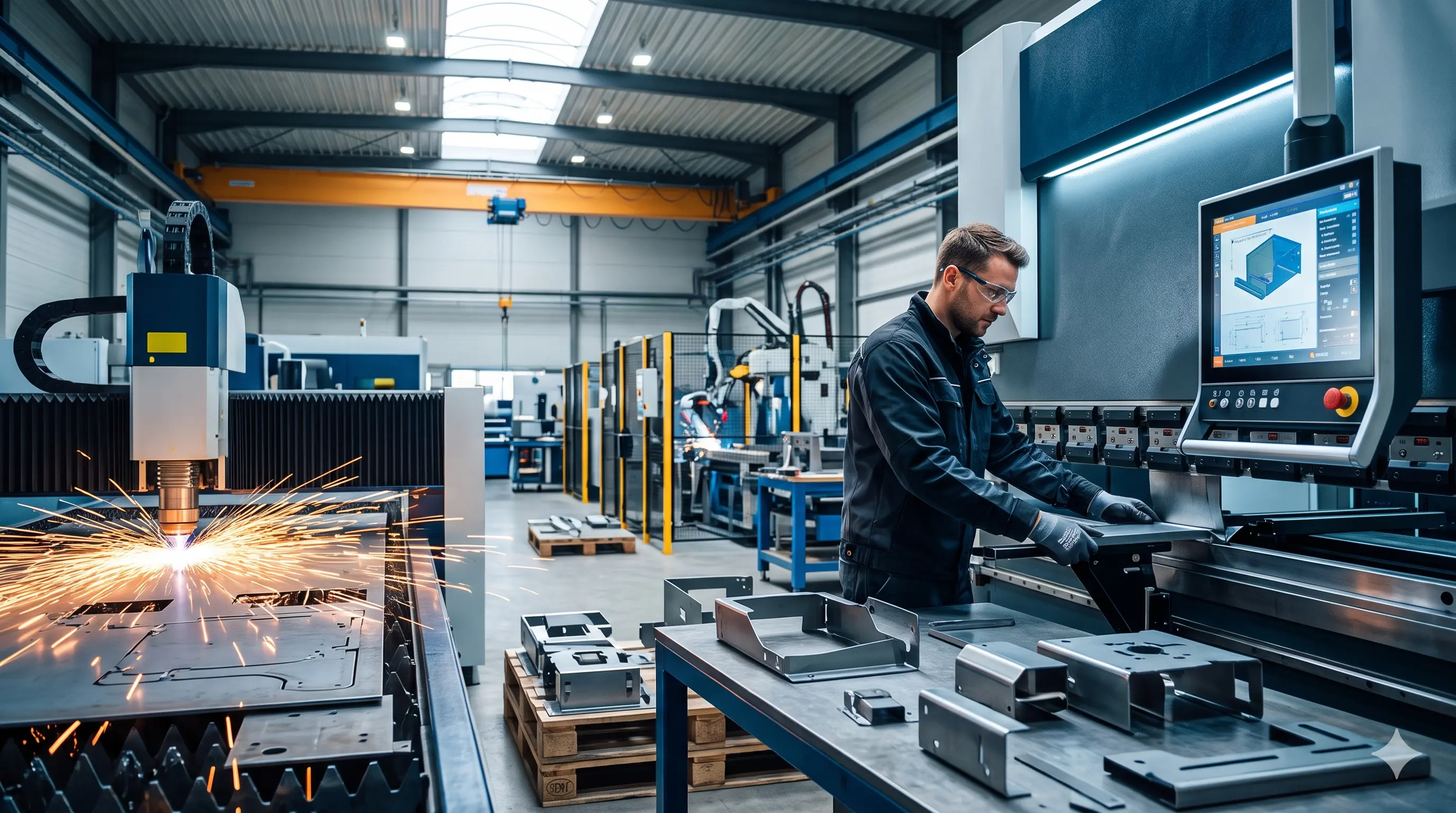
The Role of Precision Sheet Metal Fabrication in Modern Manufacturing
Selecting the right material is one of the most important decisions in industrial manufacturing. The material used for a component affects its strength, weight, durability, corrosion resistance, manufacturing cost, and overall performance.
In sheet metal fabrication, choosing a material involves more than comparing prices. Manufacturers must understand how the component will be used, the conditions it will face, the processes required to manufacture it, and the performance expected from the finished product.
For OEMs and industrial manufacturers, the right material selection can improve product reliability, simplify manufacturing, and help control production costs. This guide explains the key factors to consider when selecting sheet metal materials for industrial applications.
What Is Sheet Metal Material Selection?
Sheet metal material selection is the process of choosing a suitable metal based on a component’s functional, mechanical, environmental, and manufacturing requirements.
Common materials include mild steel, stainless steel, and aluminium. Each offers different characteristics and is suitable for different applications.
For example, a structural bracket may require strength and cost efficiency, while a component exposed to moisture may need greater corrosion resistance. A lightweight machine enclosure may benefit from aluminium, depending on its structural and operating requirements.
The best choice is the material that meets the application requirements while remaining practical to manufacture at the required production volume.
1. Understand the Component’s Application
The first step is to identify the purpose of the component.
Industrial sheet metal components may be used in machine enclosures, electrical cabinets, automotive assemblies, equipment panels, brackets, guards, support structures, and fabricated housings.
Each application has different performance requirements.
Before selecting a material, consider:
- The loads or forces the component must withstand
- Whether it will be used indoors or outdoors
- Exposure to moisture, chemicals, heat, or dust
- Weight restrictions
- Required appearance and surface finish
- Expected service life
Understanding the application helps narrow the material choices and prevents selecting a material that is unnecessarily expensive or unsuitable for the operating environment.
2. Compare Common Sheet Metal Materials
Mild Steel
Mild steel is widely used in industrial manufacturing because of its versatility, availability, and suitability for many cutting, bending, and fabrication operations.
It is commonly considered for machine frames, brackets, panels, equipment covers, supports, and general industrial components.
However, mild steel can corrode when exposed to moisture or unsuitable environmental conditions. Depending on the application, it may require surface preparation, painting, powder coating, or another suitable protective system.
Stainless Steel
Stainless steel is often selected when corrosion resistance, cleanability, or particular surface properties are important.
Applications may include food processing equipment, selected medical equipment components, industrial enclosures, and equipment exposed to moisture.
Its suitability depends on the stainless steel grade, operating environment, fabrication requirements, and cleaning conditions. Stainless steel is not completely immune to corrosion in every environment.
Aluminium
Aluminium is useful when lower component weight is important. It also offers corrosion resistance under many conditions and can be suitable for enclosures, covers, panels, and lightweight assemblies.
However, aluminium has different forming and joining characteristics from steel. Its strength, thickness, alloy, and manufacturing requirements should be evaluated before use.
The material should be chosen according to the component’s actual performance requirements rather than general assumptions about a metal type.
3. Select the Correct Sheet Thickness
Material thickness affects component stiffness, weight, forming behaviour, and cost.
A sheet that is too thin may not provide the required rigidity. A thicker sheet may improve stiffness but increase material consumption, component weight, and manufacturing effort.
Thickness also affects manufacturing operations. Laser cutting parameters, bending force, tooling selection, bend radius, and achievable geometry may vary with sheet thickness.
For this reason, engineers should evaluate thickness alongside the component’s dimensions, loading conditions, mounting method, and functional requirements.
Where appropriate, design reviews can identify opportunities to optimize thickness without compromising performance.
4. Consider Corrosion Resistance and Operating Conditions
Environmental conditions can strongly influence material selection.
Components exposed to water, humidity, cleaning chemicals, outdoor conditions, or certain industrial substances may require materials with suitable corrosion resistance or a protective surface treatment.
The correct solution depends on the type and concentration of exposure, temperature, maintenance requirements, and expected service life.
For example, a mild steel component may be suitable when an appropriate protective coating is specified. In another application, stainless steel may be more appropriate.
Surface preparation and coating selection should be evaluated as part of the complete manufacturing specification.
5. Check Suitability for Cutting, Bending, and Fabrication
A material must not only perform well in the finished product; it must also be suitable for the intended manufacturing process.
In CNC laser cutting, material type and thickness influence cutting parameters and edge quality.
During CNC bending, material strength, ductility, thickness, and springback affect the achievable shape and dimensional accuracy.
Welding and joining requirements also matter because different materials need suitable procedures and preparation.
Manufacturers should therefore review material specifications together with the component drawing and production process before committing to large quantities.
6. Balance Material Cost With Total Production Cost
The cheapest raw material does not always produce the lowest overall component cost.
Total manufacturing cost may include material procurement, cutting, bending, fabrication, surface finishing, inspection, scrap, and rework.
A material that is less expensive to purchase may require additional finishing or create more processing challenges. Conversely, a higher-priced material may provide the required corrosion resistance or durability with fewer additional treatments.
For OEMs ordering components in medium or high volumes, evaluating the complete manufacturing cost provides a more useful comparison than looking only at the price per sheet.
7. Define Quality and Material Specifications
Once a suitable material has been selected, its specifications should be documented clearly.
The drawing or purchase specification should define the material grade, thickness, applicable standards where required, surface condition, and any relevant finishing requirements.
Incoming inspection and supplier documentation can help confirm that the supplied material matches the approved specification.
This is particularly important for repeat production. Changes in material grade, thickness, or properties can affect dimensions, bending behaviour, welding, and the final product.
Clear specifications help maintain consistency across manufacturing batches.
8. Consider the Requirements of Large-Volume Production
Material selection becomes increasingly important when a component is produced in hundreds or thousands of units.
Manufacturers must consider material availability, supplier lead times, stock sizes, nesting efficiency, scrap generation, and consistency between material batches.
Choosing a material that is difficult to source consistently may create production delays even if it performs well technically.
For large-volume sheet metal manufacturing, material selection should therefore balance performance, manufacturability, supply availability, and overall production economics.
Why Choose Phoenix Fabricators?
Phoenix Fabricators India Pvt. Ltd. provides sheet metal manufacturing solutions for OEMs and industrial manufacturers.
Its capabilities include laser cutting, CNC bending, custom fabrication, powder coating, shot blasting, and laser engraving. These processes support the manufacture and finishing of components for a range of industrial applications.
Based in Pune, Maharashtra, Phoenix Fabricators focuses on medium to high-volume production requirements where consistent processes, quality control, and coordinated manufacturing are important.
For businesses evaluating a sheet metal fabrication company in Pune, discussing material specifications, component drawings, finishing requirements, and expected production quantities can help establish a suitable manufacturing approach.
Conclusion
Choosing the right sheet metal material requires a clear understanding of the component’s function, operating environment, mechanical requirements, manufacturing processes, and production volume.
Mild steel, stainless steel, and aluminium each serve different purposes. The best selection balances performance, manufacturability, availability, and overall cost.
For OEMs and industrial manufacturers, evaluating material requirements early in the design process can reduce avoidable production issues and help create reliable components. Combined with suitable cutting, bending, fabrication, and finishing processes, the right material selection supports efficient and consistent sheet metal manufacturing.
Frequently Asked Questions
1. Which material is best for sheet metal fabrication?
There is no single best material for every application. Mild steel, stainless steel, and aluminium each offer different benefits. Selection depends on strength, corrosion resistance, weight, manufacturability, operating conditions, and cost.
2. How does sheet thickness affect manufacturing?
Thickness influences component stiffness, weight, cutting parameters, bending force, tooling requirements, and manufacturing cost. It should be selected according to the component’s function and design requirements.
3. Is stainless steel always better than mild steel?
No. Stainless steel may be suitable for applications requiring corrosion resistance, but mild steel can be a cost-effective choice when its performance meets the application requirements and suitable protection is provided where necessary.
4. What should OEMs consider when selecting materials for mass production?
OEMs should evaluate material specifications, availability, supplier reliability, manufacturing compatibility, finishing requirements, scrap, and total production cost.
5. Why is material selection important in sheet metal fabrication?
The material affects component performance, durability, weight, cutting and bending behaviour, finishing, manufacturing cost, and consistency during repeat production.