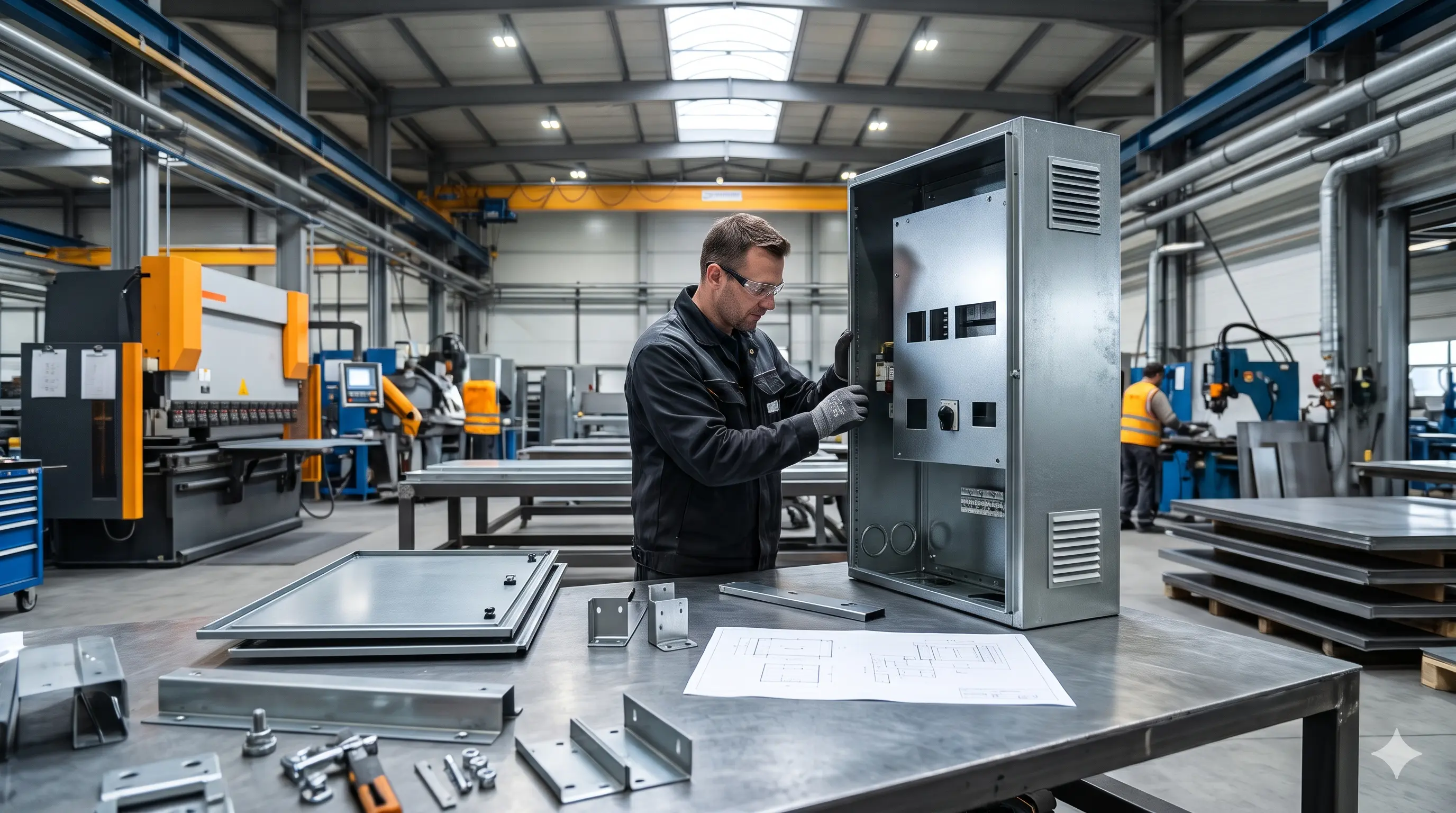
Sheet Metal Fabrication for Electrical Panels Design, Materials and Manufacturing Requirements
Electrical panels are essential components of industrial facilities, automation systems, commercial buildings, and manufacturing equipment. They house electrical devices, support wiring arrangements, and help protect sensitive components from environmental and physical damage.
The performance of an electrical panel depends not only on the electrical components installed inside it but also on the quality of its enclosure. Accurate dimensions, appropriate material selection, effective surface finishing, and consistent manufacturing all contribute to a reliable panel design.
Sheet metal fabrication for electrical panels involves converting flat metal sheets into enclosures, covers, mounting plates, doors, brackets, and other components according to engineering specifications.
For electrical equipment manufacturers and industrial OEMs, understanding these manufacturing requirements can help improve product quality, simplify assembly, and support repeat production.
What Is Sheet Metal Fabrication for Electrical Panels?
Sheet metal fabrication for electrical panels is the process of manufacturing metal enclosures and supporting components used to house electrical and control equipment.
Depending on the application, these components may include:
- Electrical panel cabinets and enclosure bodies
- Mounting plates for electrical devices
- Access doors and removable covers
- Cable entry plates and cut-outs
- Internal brackets and support structures
- Control panel housings
- Custom enclosures for automation equipment
The enclosure design depends on the equipment being housed, the installation environment, the required protection level, and the applicable electrical and safety standards.
Manufacturers must consider these requirements before selecting materials and finalising the fabrication process.
1. Selecting the Right Sheet Metal Material
Material selection affects an electrical enclosure’s strength, weight, corrosion resistance, manufacturability, and overall cost.
The appropriate material depends on the operating environment and the requirements of the finished panel.
Mild steel
Mild steel is commonly considered for industrial electrical cabinets and control panel enclosures. It offers useful structural strength and can be cut, bent, fabricated, and finished for many industrial applications.
A suitable coating system may be required to protect the enclosure from corrosion and environmental exposure.
Stainless steel
Stainless steel may be appropriate for environments where corrosion resistance and cleanability are important. The correct grade should be selected according to exposure conditions and application requirements.
It can be relevant for selected food-processing, pharmaceutical, and industrial environments, subject to the enclosure’s intended use and applicable standards.
Aluminium
Aluminium can be considered when lower weight and corrosion resistance are important. Its suitability depends on the required structural strength, enclosure design, thermal requirements, and manufacturing specifications.
Buyer tip: Specify the material grade and thickness in the engineering drawing or purchasing documentation. If the choice is still open, discuss the operating environment and performance requirements with the design and manufacturing teams before finalising the specification.
2. Designing Enclosures for Manufacturing
A design that works in a CAD model must also be practical to manufacture and assemble.
During the design stage, engineers should consider the enclosure’s overall dimensions, sheet thickness, bend geometry, mounting locations, door clearances, and component access.
Important design considerations include:
- Adequate space for internal electrical equipment
- Correct mounting hole positions
- Suitable access for installation and maintenance
- Appropriate clearances for doors and removable covers
- Cable entry locations and required cut-outs
- Suitable edges and corners for handling and assembly
- Provisions for hinges, locks, fasteners, and mounting hardware
Designers should also consider how the enclosure will be installed, transported, opened, and maintained.
Early coordination between the electrical design team and the sheet metal fabrication manufacturer can help identify design issues before production begins.
3. The Role of CNC Laser Cutting
CNC laser cutting is used to create the profiles, openings, slots, and holes required for many electrical panel components.
Depending on the design and material, laser cutting can produce detailed geometries that support accurate fabrication and repeatable production.
Common applications include:
- Cut-outs for switches and display units
- Cable entry openings
- Ventilation patterns
- Mounting holes and slots
- Door and cover profiles
- Internal component mounting plates
The drawing must clearly identify critical dimensions and cut-out positions. Incorrect opening locations can create assembly difficulties or require expensive rework.
Manufacturers should also consider the relationship between cut-outs, material thickness, edge quality, and the subsequent bending operations.
Learn more about CNC laser cutting services for industrial sheet metal components.
4. CNC Bending and Enclosure Strength
After cutting, sheet metal parts are often bent to create the required enclosure shape.
CNC bending forms flat sheets into doors, side panels, channels, brackets, and cabinet structures. Correct bend angles and dimensions are important because they influence the final component geometry and assembly fit.
When designing an electrical enclosure, consider:
- Bend angles and inside bend radii
- Sheet thickness and material properties
- Bend allowances and deductions
- Flange dimensions
- Hole and cut-out proximity to bend lines
- Assembly clearances and mating surfaces
Poorly positioned holes or cut-outs near bend lines can cause manufacturing difficulties or dimensional changes.
Clear drawings and appropriate manufacturing reviews help reduce these risks. For components produced repeatedly, controlled bending processes can also support consistency between batches.
Explore CNC bending services for formed sheet metal components.
5. Surface Preparation and Powder Coating
Electrical panel enclosures may be exposed to dust, humidity, handling, and other environmental conditions. The required surface protection should therefore be defined according to the intended installation environment.
Powder coating is one finishing option used for many industrial sheet metal enclosures. It can provide a uniform appearance and a protective coating when the material preparation, coating system, and curing process are suitable for the application.
The finishing specification should identify relevant requirements, including:
- Colour and gloss level
- Coating thickness, where specified
- Surface appearance and acceptable defects
- Areas that must remain uncoated
- Corrosion-resistance requirements
- Masking and grounding-contact requirements
Surface preparation is an important part of the finishing process. Contaminants, inadequate preparation, or incorrect curing can affect coating performance.
The selected coating must be appropriate for the panel’s operating conditions. Powder coating alone does not establish a particular ingress-protection rating or guarantee suitability for outdoor use.
6. Why Dimensional Accuracy Matters
Electrical panel components often need to fit together with mounting hardware, electrical devices, doors, hinges, locks, and cable management systems.
Dimensional errors can result in misaligned mounting holes, uneven door gaps, assembly delays, or interference between components.
Quality planning should identify the dimensions that are critical to fit and function.
Depending on the project, checks may include:
- Overall enclosure dimensions
- Mounting hole positions
- Cut-out sizes and locations
- Bend angles and flange dimensions
- Door alignment and clearances
- Surface finish and coating condition
Inspection methods should be selected according to the component design and required tolerances.
For repeat production, maintaining consistent drawings, revision control, and inspection criteria helps reduce variation between manufacturing batches.
7. Electrical Safety and Environmental Protection
An enclosure’s mechanical quality is only one part of the complete electrical panel requirement.
The enclosure design and finished assembly must meet the applicable electrical, mechanical, environmental, and safety requirements for the intended installation.
Depending on the application, buyers and designers may need to specify:
- Required ingress-protection rating
- Earthing and bonding provisions
- Cable entry and sealing arrangements
- Ventilation or thermal management
- Door locking and access requirements
- Applicable electrical panel standards
- Corrosion and environmental exposure conditions
Ingress protection depends on the complete enclosure design, including joints, gaskets, cable glands, doors, and assembly details. It should not be assumed from the sheet metal fabrication process or coating finish alone.
Electrical design, testing, and certification requirements should be addressed by the responsible engineering team and qualified specialists.
8. Manufacturing for Repeat Orders and OEM Production
For electrical panel manufacturers and industrial OEMs, consistent component quality is important across every production batch.
A repeatable manufacturing process can help maintain mounting positions, enclosure dimensions, door geometry, and finish requirements.
To support production consistency, buyers should provide:
- Approved engineering drawings
- Confirmed material grades and thicknesses
- Defined tolerances and inspection criteria
- Finalised coating and colour specifications
- Approved sample requirements, where applicable
- Controlled drawing revisions
- Expected order quantities and delivery schedules
When a panel design changes, the updated drawing and revision status should be communicated clearly to the manufacturing supplier.
This reduces the risk of producing components to an outdated specification and supports better coordination between engineering, purchasing, and production teams.
9. Choosing a Sheet Metal Fabrication Manufacturer
Selecting a suitable fabrication partner involves more than comparing unit prices. Buyers should assess whether the supplier’s manufacturing processes align with the project’s technical requirements.
Consider the following factors:
Process capability: Confirm whether the supplier can provide the required cutting, bending, fabrication, and finishing operations.
Drawing interpretation: Check how technical questions, design revisions, and critical dimensions will be managed.
Quality practices: Understand the supplier’s inspection methods, documentation, and approach to maintaining consistent output.
Finishing requirements: Verify that the required coating or surface treatment can be provided to the specified requirements.
Production planning: Discuss quantities, delivery schedules, repeat-order expectations, and any sample approval requirements.
An integrated manufacturing partner may also help simplify coordination when multiple fabrication and finishing operations are required.
Phoenix Fabricators India Pvt. Ltd. provides customised sheet metal fabrication services, including laser cutting, CNC bending, powder coating, shot blasting, laser marking and engraving, and custom fabrication. These capabilities are relevant to a range of industrial component requirements.
Explore the company’s sheet metal fabrication solutions and industries served to learn more.
Frequently Asked Questions
1. Which material is commonly used for electrical panel enclosures?
Mild steel, stainless steel, and aluminium are among the materials considered for electrical enclosures. The choice depends on strength, corrosion resistance, weight, installation environment, and applicable specifications.
2. How is sheet metal used in electrical panel manufacturing?
Sheet metal is used to manufacture enclosure bodies, doors, covers, mounting plates, brackets, cable entry plates, and other structural components.
3. Why is CNC laser cutting useful for electrical panels?
CNC laser cutting can produce enclosure profiles, mounting holes, slots, and equipment cut-outs according to engineering drawings. The suitability of the process depends on the material, thickness, geometry, and tolerance requirements.
4. Is powder coating suitable for electrical panel enclosures?
Powder coating can provide a durable finish for many industrial enclosures when the surface preparation and coating system are suitable. The final specification should reflect the installation environment and required performance.
5. What information should be provided when requesting an electrical enclosure quotation?
Provide engineering drawings, material grade and thickness, dimensions, cut-out locations, tolerances, finishing specifications, quantities, quality requirements, and delivery expectations.
Conclusion
Reliable electrical panel enclosures begin with practical design, suitable material selection, accurate cutting, controlled bending, and finishing that matches the intended environment.
For electrical equipment manufacturers and industrial OEMs, clearly defined engineering specifications and consistent manufacturing processes help support assembly accuracy, product quality, and repeat production.
Working with a sheet metal fabrication manufacturer that understands drawing requirements, finishing processes, and production consistency can help turn electrical enclosure designs into components ready for the next stage of manufacturing.